
On their face, the worlds of payments and member well-being may seem miles apart. On the one hand you have a quickly changing revenue driver, steeped in data, and oriented towards business needs and driving competition. On the other you have an impact-oriented strategy with a relatively slow-moving goal post that may not directly make your business money and struggles to yield consistent data and feedback. And yet, when you put 80 leading credit union executives in a room, the connectivity between those spaces shows where credit unions can shine if they’re able to meet the moment.
We unpacked these conversations and more at the 2026 Inner Circle Symposium focused on exploring our two newest research areas: the Centers for Member Well-Being and All Things Payments. The respective fellows, Dr. Mat Despard and Dr. Henry Kim, shared their vision for what’s been done so far, insights from their past research, and guided conversations on shaping the future of these two areas. We were also joined by Next Generation fellow Kim Lear to discuss how demographics are shifting and how the stories credit unions tell need to change as we prepare to launch the Center for Differentiation & Storytelling in July.
These are some of the top takeaways from the conversations and the event.
Member Well-Being
Very few credit unions can measure the impact of their efforts.
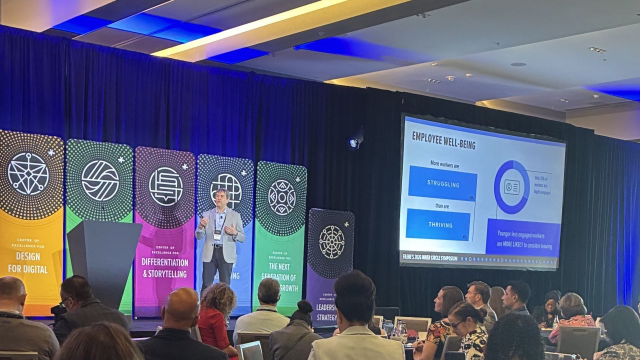
1: Improving financial well-being is core to the credit union ethos, a key differentiator for the industry, and a sizable investment for many credit unions. And yet, very few credit unions can measure the impact of their efforts.
Attempts at measurements abound, but most err on the side of counting actions without understanding the real impact on the member. Between the credit unions present, pieces of impact measurements started to emerge (e.g., auto-enrollment in credit score monitoring, investment in the third-party wellness scoring platforms), but there was a sense of incompleteness in those measurements and the ability to benchmark performance. For leaders, this means making investments without a clear signal for what is going to drive the most material difference in your members.
2: Payments interactions are one of the richest indicators credit unions have to the financial health of their members. Most credit unions do not have a way to interpret and leverage this data.
Understanding member behavior, implementing early warning system-type monitoring, and being ready to support members in critical moments, is a potential differentiator for credit unions. This work brings together major pillars of credit unions’ strategies – member well-being, payments, and digital/data – to enable the delivery of care and “people helping people” in a digital context.
3: Credit unions’ employee well-being strategies are strong, but they lack the coherence needed to be positioned as the differentiator for the retention of existing employees and the attraction of young, in-demand talent.
Credit unions invest heavily in employee well-being, through robust benefits packages, employee-only financial well-being services, discounted financial products, and a host of other benefits. In many cases, these benefits go above and beyond what an average large corporation is offering. However, the initiatives tend to be disparate and the measurement of the programs, much like the measurement of member financial well-being, is missing in making the case, both internally and externally, for the differentiation this provides.
All Things Payments
Fraud is the speed limiter. Solve it and you unlock everything else.
1: The payments space is changing quickly and even the largest credit unions don’t feel that they have their footing when it comes to preparing their organization for where they need to move next.
We heard from leaders that they don’t feel equipped with the information they need to make confident moves in the payments space. Foundational elements, like capabilities and competencies and their maturity at different sized institutions, are gaps that are creating hesitancy in a space that is moving too quickly for partially informed or deferred decision making.
2: Payments strategies center technology and rails over members and their experiences; this focus spills over into execution and interfaces, putting the onus on members to make decisions that they should not need to make.
Payments-related conversations move from strategy to tactics quickly, focusing on rails, technologies, and implementation roadmaps rather than member outcomes. Members want their money to move quickly and safely, not through a specific rail. For leaders, this means keeping member outcomes and member experience at the center of the payments conversation, creating intuitive solutions that don’t require members to understand their payments ecosystem.
3: Risk management and member experience go hand-in-hand in payments; an elegant solution is one that doesn’t materially impact the member experience, either in terms of speed or security.
As Dr. Henry Kim simply put it, “Fraud is the speed limiter. Solve it and you unlock everything else.” The controls, governance, and, ultimately, technology that is developed to protect members and the credit union will also determine who can deliver the best member experience. Relying on slowing payments to reduce fraud will impact the member experience and the ability to compete, while prioritizing speed over safety will lead to reduced trust and increased cost to the credit union.
4: Competing in the payments space requires scale that even the largest credit unions do not have; industry-backed solutions could provide that scale, but individual credit union strategies and a competitive partnership landscape is fragmenting efforts.
One of the first refrains when stablecoin strategy enters any conversation is “we need a credit union solution.” And yet the actions and activities of many credit unions and system partners do not point towards a unified solution to solve for scale, but individual interests and those trying to be first to market. While the early moves may have short-term gains, it may be shortsighted in terms of the outcome for the industry and their ability to provide a compelling solution to consumers.
Differentiation & Storytelling
What does it say about me that I align myself with this institution?
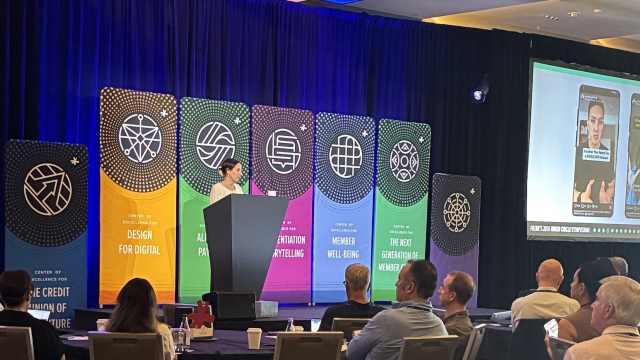
1: Credit union stories are being told in an echo chamber, looking inward at the industry or at the (aging) members who built them. These stories aren’t shaped for different audiences and often rely on rhetoric and differentiators that don’t resonate with today’s consumers in today’s market.
Credit unions are people-helping-people. They’re mission driven and community oriented. They’re tax exempt and therefore can offer better rates. All of things these can be true and important and mean little to nothing to prospective members. For leaders, shaping a resonant story requires viewing it through a number of different external and dynamic lenses: your audience, the moment, and the larger mission you operate within.
2: The role of identity looms large in conversations on differentiation and storytelling. And while credit unions need to be clear on their own identity, they also need to be aware of the other identity calculations many consumers are making: “What does it say about me that I align myself with this institution?”
In the same way that consumers wear certain clothes or drive certain cars because of what it signals about their identity, consumers are calculating what it means about them to bank with different institutions. For leaders, this shifts storytelling from a marketing exercise into a strategy growth lever. Credit union identities need to align with how consumers see themselves, and want to be seen, in a competitive financial services landscape.
Meeting the Moment
While the topics were far reaching, much of the conversation came down to this: the future is unclear; how do we ready ourselves to meet the moment? Without knowing exactly what it will be, how do we ready ourselves to take on the next payments innovation? Without knowing when it will happen, how do we ready ourselves to help members in the moments they need it most? Without knowing how the generational winds will shift, how do we ready ourselves to tell the stories that needs to be told to stay relevant for another 100+ years?
Meeting the moment will require leaders to balance speed with trust, innovation with coherence, and opportunity with uncertainty. It demands organizations positioned for change, strategies that are future‑focused and data‑disciplined, and technology designed to anticipate what’s next rather than optimize what already exists. These threads run through all our Centers of Excellence but will be especially true for the upcoming work from Member Well-Being, All Things Payments, and Differentiation & Storytelling as we support credit unions prepare to meet the moment.
What This Means for You
The challenges surfaced at the 2026 Inner Circle Symposium are not hypothetical, they are the realities credit union leaders are navigating right now. Whether you are rethinking how you measure member well-being, determining your next move in payments, or shaping a story that resonates with the next generation of members, you do not have to figure it out alone.
Our Centers of Excellence in Member Well-Being, All Things Payments, and Differentiation & Storytelling exist to help credit union leaders move from insight to action. If the conversations from this year's Symposium resonated with you, we invite you to learn more about our centers of excellence and how your credit union can join the Inner Circle to help shape the future of this important research.
Reach out to Jessica Gamache, Filene's Head of Research directly at [email protected] to start the conversation.