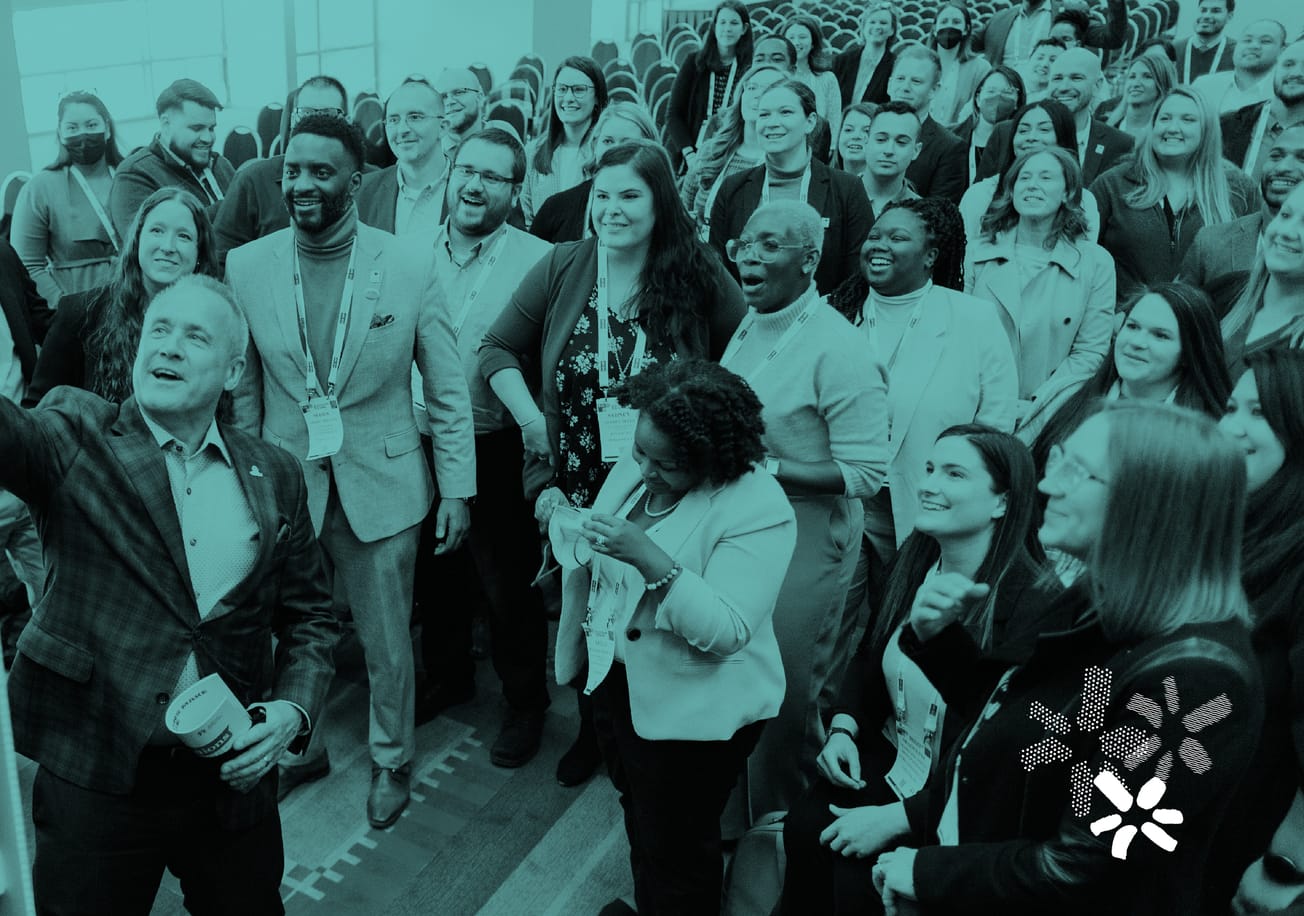


In this episode, Cortney Arnold and Kaeshier Fernandez explore leadership and talent development among digitally native, future credit union leaders. Their conversation highlights the importance of creating space for digitally fluent team members, balancing authenticity with professional expectations, and leaning into generational differences as an organizational asset. They also examine how the principle “to be clear is to be kind” strengthens talent development by setting direct expectations while supporting growth. It offers practical perspective for people leaders at all levels and young professionals looking to take their development to the next level.
Subscribe to The Filene Fill-In on your favorite podcast player so episodes always appear at the top of your feed!


Episode Transcript
Filene Host: In our last episode with Amy Hillman, we talked about leadership at the board and executive level and what it really takes to guide an organization through change. Today’s conversation builds on that idea by moving a level deeper into the organization, because leadership readiness isn’t just about who’s at the top. It’s also about how we develop the people coming up behind them.
This episode is for people leaders at all levels who are thinking about digital readiness not as a technology problem, but as a people and leadership challenge. How do you create space for emerging leaders, especially younger professionals with strong digital fluency, while still providing clear expectations and guardrails?
To explore that, I’ll turn things over to our Director of Partnerships, Cortney Arnold, and our newest Community Manager, Kaeshier Fernandez, who work with credit unions and future leaders on this exact issue.
Cortney Arnold: Kaeshier, I’m so excited that you’re here today to have this conversation about emerging leaders, strategic thinking, and digital fluency. So before we dive into that, would you be so kind as to share a little bit about yourself with this audience?
Kaeshier Fernandez: So happy to be here, Cortney. Thank you so much for having me. My name is Kaeshier Fernandez. I am the new Community Manager for Filene. That’s going to be a title I’m going to have to get used to.
I spent the last nine years at a credit union, Redstone Federal Credit Union in Huntsville, Alabama. It’s been a pleasure getting to work with members and with our community firsthand before coming into this position. So I’m just excited to be here.
CA: We’re excited to have Kaeshier here. I have had the privilege of watching him through the Crash journey. He was a Crasher at GAC, then he crashed a couple of other events, and then he came back as a Crash leader. So it’s been super exciting. And, part of why we were excited to invite Kaeshier to this episode, not only to introduce him to all of you, but also because he has such a unique perspective of service in what he has done in the credit union system for the last eight years. So not to be elusive, would you mind telling the audience a little bit about what you did at Redstone?
KF: In those nine years, I started as a teller and worked my way through member service. But really, the last seven year has revolved around financial education. I’ve been able to go out in the community and work with so many different groups and classes.
I started primarily with youth, kindergarten through 12th grade. So, that was an awesome way to get into it. Eventually, I became our program lead. For about the last two years, I was the program lead, really leaning more into how to make processes more efficient, providing all the needs that our coordinators needed, and everything like that.
CA: That’s awesome. That’s perfect because what we’re really trying to hone in on today is this idea that digital readiness starts with people, and that we have a wealth of knowledge with some of our younger members, and not only our younger members, but some of our younger team members.
One of those big gaps is how do we leverage those team members? From your experience and what you’ve seen over those years, are there ways in which younger generations are interacting with financial tools or digital tools that you’ve seen that have been inspiring or eye-opening for you?
KF: Yeah, yeah. I think this goes for a lot of credit unions in different spaces. We’re all kind of seeing a lot of younger folks in our communities. When they’re looking for financial advice, they’re really relying on social media, which is very interesting.
If it’s not handed down from their parents, they’re usually researching something online. They’re pretty independent when they do it, so that’s kind of cool. But knowing they’re going to social media for it, there are all sorts of people on social media. So I think it becomes more important to make sure there’s quality information out in these public spaces.
I think that’s a great opportunity for credit unions to come in and take advantage of that.
CA: I think that’s a really interesting point, especially when we think about how we can lift these voices up and bring them into the conversation.
So, from your experience, I know you’ve met a lot of Crashers and worked with a lot of young people. What do they tell you are some of their biggest challenges with either, moving up within an organization, or having their voice be heard in their role?
KF: That’s tough. I feel like I’ve faced some of that myself, and a lot of the Crashers I’ve interacted with have too. It really tends to come down to not being experienced enough or being told they don’t have enough experience just yet.
So I think it’s one of those situations where we need to be able to find a good way to help give them that experience while leveraging all the knowledge they already have, especially when it comes to technology and things like that.
CA: Yes. I think that’s so insightful because we get to marry, you know, the expertise that these individuals have, just, you know, growing up in the world of technology, growing up in the world of social media. You know, their digital literacy and fluency is quite incredible. And especially as we think about shaping member experiences in the credit union, there's such a vast wealth of knowledge among this generation, but also, we need to make sure that leaders and credit unions see it that way. And then we're also providing those, you know, strategic skills.
And so there's this common phrase that we use at Filene quite a bit. And I really love that we get to bring it in here.
And that is “clear but kind” or to be clear is to be kind. And so when we think about this idea of readiness and leadership and developing and, you know, everything that kind of comes into that. I've heard very similar things with, you're not quite ready yet. And it's like, well, what is, you know, what's going to push me into that next level?
And so I think this is where we can really start to think about what does good leadership look like when we are working with and developing the next generation? So do you have thoughts on what that perfect picture might look like?
KF: Yeah. It’s interesting because I really felt like even my last manager in my last role was super awesome. And I think what really helped him do that was he was very open to new ideas, new processes, new ways of thinking. He always asked questions and allowed me the space, really, to contribute in that way, whereas there probably weren’t many other meetings where I could do that, right?
So I knew he was at least that one person I was able to do that with. And that made it so easy for ideas to flourish. And so I think even when it comes to learning about whether it’s technology or really any topic that these younger generations are going to be bringing with them into the workforce, I think really creating that space for them to be able to talk and actually voice some of these things is going to be very important.
CA: Yeah, I could not agree more. And, you know, as this conversation comes up, I often like to share my experience as an emerging leader, which I feel like I’m definitely coming out of that, which is bittersweet.
Back when I was working in the credit union, that was one of those conversations—how do you develop, how do you grow, how are you seen? And I’ll never forget when the opportunity came for me to actually apply to work at Filene. I had to have a conversation with my boss because it was going to require me to fly across the country to go have this job interview. And I worked in a call center.
So then the question became, oh my gosh, can I get the time off to do this? And what was really critical is that I had such an open relationship with my boss that I could say, hey, this is an opportunity. Can I take this opportunity? And can you give me the time to do this? And it was supported.
But that absolutely wouldn’t have happened if I didn’t have the relationship that you just described, and that’s of openness, curiosity, asking questions.
So I’m just kind of thinking through and really interested in your thoughts on this. It’s like this difference or the balance between encouraging and being realistic with what’s possible in terms of opportunity. So have you seen that balance done really well? And then do you have advice for the leader who’s really trying to find that balance for their emerging professional?
KF: Yeah. It really is tough because I think there are a lot of really good leaders who are trying to, and it kind of just differs between credit unions, right? Everyone does things differently. Everybody has different ways to kind of get into leadership and things like that.
What I really liked from my experience was, again, kind of like you, I had that manager that was just wholeheartedly—whatever I needed, whatever support he needed to give me, it was there without question.
So it was interesting because even for me, not even just applying for this job, but also applying for Crash in the first place, I don’t feel like it was something that was really talked about, at least in the circles that I was in. So even for me, just finding the opportunity to Crash and learn more about the industry kind of just came very randomly. I just found it online one day on LinkedIn or something, and here we are today.
So I think that’s a good example too of just as simple as, hey, I have this really cool idea or I have this really cool conference I want to try to apply for, and then a leader just being like, let’s do it. Let’s do it. Let’s apply and let’s see how it goes. And that’s basically how it went for me.
CA: Yeah, that’s really awesome. It brings up this idea of, like, and we still have to be ready. And I say we, you know, young professionals, emerging professionals. When we have these conversations, when we want to be developed or have these opportunities to go to Crash or whatever that next step is, we still have to be ready. And we still have to demonstrate that we care and that we’ve tried and we work on the feedback that we get.
So sort of like last questions as it relates to this leadership conversation. You know, to be clear is to be kind, right? And so just kind of repeating that thread again, that also means that we have to tell the folks that are coming up through the organization, those emerging leaders, what is that feedback? Like really kind of getting to the heart of it and not just saying, oh, it was great, it was fine.
But actually saying, it was great, and you could enhance your executive presence by X, Y, Z, and doing these very specific things. Or when you get the feedback of, well, I just don’t want to come in that many hours, or I want to have a flexible work schedule, or I don’t want to move across the country for a job—which is really fascinating because you are doing that—having that clear conversation and saying, okay, I understand that these are things that are challenging for you, and also moving across the country for your job could really end up being an incredible opportunity for you that might make you uncomfortable for a little while. And you might still want to consider that.
So from your perspective, when you think about those kinds of conversations, what helps people show up to them and really lean into that feedback versus hearing the feedback and shutting down?
KF: Totally. I think one of the biggest things, too, and you kind of touched on it yourself, and I feel like it’s been kind of a running theme through almost every Crash event that I’ve been through, but there was always that phrase of just being comfortable being uncomfortable and getting used to that.
There are a lot—it’s one of those things where you grow in those most uncomfortable moments. And I feel like the longer you can sit in that space, the more you’ll grow and the faster you’ll grow.
So I think it’s really interesting to apply that too with the relationships that leaders are having with their younger employees. One, don’t be afraid to be uncomfortable. Be real. I think these younger generations really adhere to authenticity and they really lean into that. So you’re going to have more authentic conversations the more real you can be with one of your employees.
So invite that into the space. And I think that’s going to be what allows people to show up as themselves and be able to contribute these ideas and not have as much fear to contribute. And then again, that allows opportunities for both sides to grow, right? Because I’m sure it’s kind of awkward and it’s kind of new for the younger employee as well. But the leader gets to hand down that knowledge, and there’s so much that leadership can also learn from these younger employees.
CA: Yeah, absolutely. And it sort of reminds me of this concept that it’s okay. It’s okay to have to give feedback. And it makes, at least in the times that I’ve had to do it, it is never comfortable. Sometimes it can be really difficult as a leader to share that. And also as the person receiving the feedback.
And you nailed this, right? You want to have these authentic conversations. You want people to be able to show up as they are. And also there’s this level of, we’re still professional. We still have to do the job. We still have to show up every single day and serve our members.
So we still have to have that, yes, we want you to be you. And we also need you to understand that there is a business case and that discernment is really important and that there’s a time for you to show up and be your goofy, authentic self. And then there’s a time for you to allow some of that to come through, but really, you’re the face of the business or the face of the credit union. So it’s just such a fascinating balance. It’s like walking along multiple worlds to make it all work.
KF: Yeah. I will say one thing too. I would encourage any leader, really, to remember that they hired this person. They hired this younger employee for a reason. And so they know what they’re doing. And it’s never really a bad thing to say that you don’t know something.
And that you’re asking for help from these younger people, because I think that’s exactly how we move forward.
CA: I could not agree more. And it’s so funny. I learn so much from Crashers, so much all the time. It’s mind-boggling the different things where I’m like, wow, they’re so much more efficient than me in so many different things as it relates to technology.
And also, I still learn so much from those thought leaders who have been in the industry for a longer period of time. We all have something to offer. We can all learn so much from each other. So just come from a place of curiosity, and we don’t know everything.
So I think that’s a really beautiful segue into learning a little bit more about you and your curiosities and interests as you step into this role. What are some of the things that you are most interested in learning about from credit unions?
KF: I love this question because I think it’s one of those where I’m also getting really excited about conversations like this. I feel like I’m always in this weird place right between Gen Z and millennials. I’m ’95, so I was born right in the middle of where that transition is happening.
So it’s always kind of felt like I’ve grown up with almost two generational perspectives. In a weird way, I’ve always kind of considered myself a little bit of a bridge too. So I almost feel like it’s kind of my responsibility to help explain some of these misunderstandings or these different generational differences and just make it clear that we all want the same things. We all kind of have the same goals. It’s really just a matter of how we get there and the perspective that’s different.
I don’t speak many languages, but generational languages is probably one that I think I could say I’m learning better. So I’m excited for that.
CA: I love that so much. I have also felt much like a bridge. I’m definitely a millennial and in that generation, but I was raised by two folks from the Silent Generation. So I definitely have some Gen X really ingrained into me, but also very, very much millennial through and through.
Kim Lear, one of our researchers, would call them just that. She would call them a bridge, and incredibly necessary humans because they can see both perspectives. And they’re going to be the people in those organizations who bring folks along. So if you’re listening and you feel like you’re a bridge, just know that you are a very critical piece of your organization.
So that sounds like something that you’re excited about. Anything else that excites you as we go into GAC this year? This is going to be your first time co-leading a Crash. We’re going to be going at this together. So are there other types of conversations that you’re excited to have as you go into this year?
KF: Man, it’s so hard to just pick one. I think I’m looking forward to all of them. It’s been really interesting being selected as a Crasher in 2023, getting to come back as a mentor in 2024. This is this really cool full-circle moment in a way to now be co-leading these, and then in the future leading them myself.
I love being able to see anything from a different angle or perspective. So I’m also excited to allow myself to be more curious, not just about the industry, but just about credit union professionals across the country.
You said it yourself too, there’s so much that we can learn from everybody. So I’m really excited to just be able to meet more people, learn new things, and share knowledge wherever I can.
CA: I love that. Okay, so if credit unions got one thing right over the next year to year and a half, what do you hope that that is?
KF: I would say, again, going on this topic of younger employees, truly lean into them. I think credit unions—we’ve all seen it historically—we’re a little bit slower to catch up with some of the trends and technologies and things like that. But who better to know them than the ones who are using them the most?
So really lean into them. I know a lot of credit unions may have high school branches or college branches. Definitely use them as a focus group, if possible. Get ideas from them.
The younger employees who are joining the conversation now, joining the workforce, lean into them. Bring them into meetings. Get their perspective on things and really, really utilize that feedback. Not just receive it, but utilize it. I think it will be very helpful.
CA: Yeah, I love that. I think that’s amazing. It’s funny, I asked you this question and now I’m going to try to see if I can think of an answer. I put myself on the spot.
If there’s one thing that I hope credit unions get right in the next 12 to 18 months, since we are talking about digital fluency and talent and all that good stuff, keeping it in line with talent, I would say that one of the big things that I’ve heard over the last year or so is this idea of change management, communication, leadership changes.
If there’s one thing that credit unions can do right in the next 12 to 18 months, it’s going to have to do with really honing in on what that clear communication looks like for your organization right now. Not to say that it’s going to be permanent, but how are you communicating these changes? How are you communicating the importance of developing your team and bringing new team members in so that it all kind of relates to growth and talent development?
Communication is always changing and always evolving. There’ll be a new plan next year and a new plan the year after that.
All right, well, we’re coming to our close, so I have one final parting question for you. If you can tell me what gives you the most optimism as you think about the next generation of leaders coming into this industry, what would that be?
KF: I think the one thing that makes me super optimistic right now is these younger generations are very observant. They’ve seen a lot of things happen. A lot of them are experiencing, and still kind of experiencing, the repercussions of things like COVID. They’ve seen parents and family members go through financial crises in so many different ways.
So they’re a little bit more vigilant. I feel like these younger generations are going to be more aware. They’re going to focus on educating themselves even more so that they don’t experience the same thing.
I’m really excited about that. And I think that’s what gives me so much excitement in just being in this space in general and getting to work with them and help develop emerging leaders, because I know they’re going to be the ones taking care of me one day.
CA: Yeah, absolutely. There’s so much that they’re going to be able to do. And I’m so excited for the fact that they are going to keep us accountable to integrity and ethics and doing the right thing, not necessarily the easy thing.
In business, that’s difficult, but it’s also very important. Especially if we think about our roots as people helping people, we’re mission-driven organizations. I think they’re going to keep us really on that track, but also usher us into that digital world.
So we have the integrity and we have that experience that people and consumers really need and want from their financial partner. So I agree. I’m so excited. This was awesome.
Well, Kaeshier, this was such a joy. I cannot wait to co-host Crash the GAC with you.
KF: I’m so excited. I’m looking forward to it.
CA: Awesome. Well, we’ll see you out there somewhere. Bye.
Filene Host: This conversation wasn’t just about social media or digital tools. It was about leadership, about creating space, and recognizing where expertise already exists inside our organizations.
When Kaeshier talked about younger consumers turning to social media for financial guidance, he highlighted something bigger. Trust and financial habits are increasingly shaped in digital spaces. That’s exactly what we’re exploring in our upcoming Finfluencer report, and why emerging, digitally fluent leaders are so essential to the future of this work.
Digital readiness isn’t separate from talent development. It’s about how we listen, who we invite in, and whether we’re willing to grow alongside the next generation.
Thanks so much for joining us, and we’ll see you next time on The Filene Fill-In.
Shownotes
Following Cortney and Kaeshier's conversation on authenticity, meeting the next generation where they are at, and providing sound financial advice at the same time, we’re linking our Finfluencer Campaign Playbook which provides a social media toolkit for credit unions and the research to back it up.
For upcoming publications mentioned or more of our work check us out directly at Filene.org.